Key Takeaways
- Threat detection in real-time can detect and prevent ransomware, zero-day exploits, and unusual activity.
- Behavioral-based detection enhances signature-based antivirus to identify fileless and unknown malicious behavior.
- Machine learning and AI enhance cloud endpoint protection by decreasing false alarms and detecting anomalies more rapidly and prioritizing threats.
- The automated response capabilities of Cloud EDR allow automatic response actions like device isolation, file quarantine, and rollback ransomware to minimize the damage.
- Powerful EDR, forensic insight, threat containment and continued threat hunting services are offered to Fidelis Security to enhance cloud endpoint security.
The shift to remote work, hybrid cloud, and the proliferation of endpoints means that traditional antivirus software is no longer enough. So, businesses are seeking more advanced, faster, and scalable cybersecurity solutions that defend all their devices – be it a laptop, smartphone, server, IoT device, or workload in the cloud. This is where cloud-based endpoint security comes in.
Unlike traditional on-premises endpoint security solutions that are heavily reliant on on-premises deployment and signature matching, cloud-based endpoint security solutions leverage the power of the cloud, artificial intelligence, and machine learning, behavioral analysis and response to achieve better and quicker protection. As attacks grow more sophisticated, particularly ransomware, fileless malware, zero-day and phishing, businesses need to invest in solutions that can both prevent and respond to threats. Cloud endpoint security is now a business imperative.
In this article, we’ll look at the critical features of a cloud endpoint protection solution and what to look for when choosing one.
The Importance of Cloud Endpoint Security
Legacy endpoint security primarily uses signature-based antivirus software installed on devices. These are effective for known threats but are less effective against evolving new attack methods. The answer to this problem is cloud-driven endpoint protection, which moves intelligence, analytics, and policy management into the cloud. This approach helps companies to enhance visibility, automate security processes, and enhance endpoint protection and response without significant infrastructure investments.
They can also scale out security across thousands of endpoints and reduce costs and time to detect.
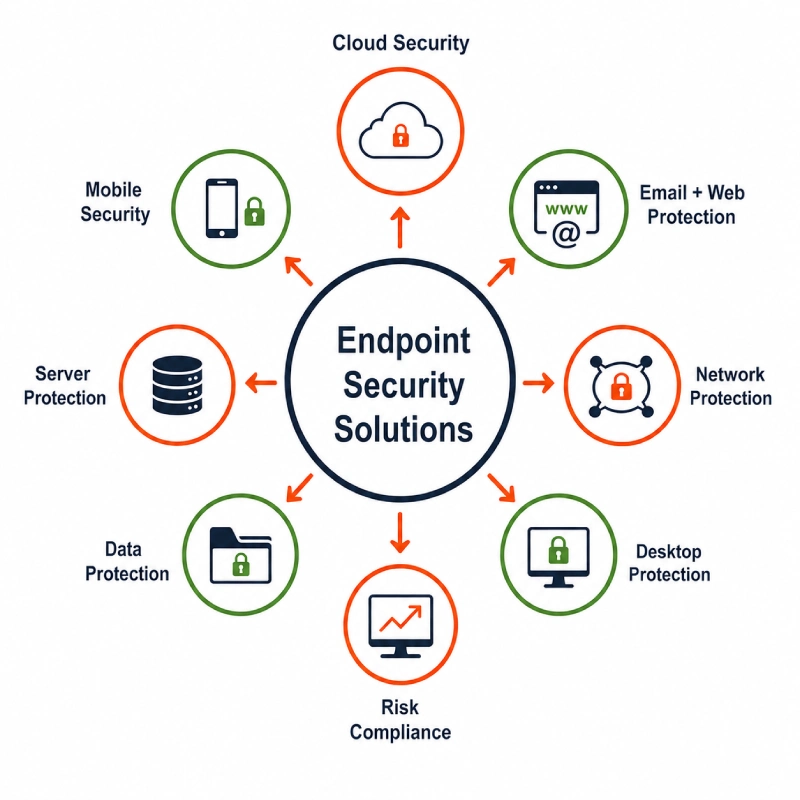
8 Features Your Cloud Endpoint Security Solution Must Have
1. Real-Time Threat Detection
The most obvious feature of cloud-based endpoint protection is real-time detection. Ransomware can encrypt valuable business information in a matter of minutes, and damage can occur if it’s not detected quickly. Modern cloud-based endpoint security software monitors system events such as processes, file changes, network activity, and user activities. They quickly analyze this in the cloud, rather than waiting for periodic antivirus scans, to detect anomalies. This greatly accelerates the responsiveness to zero-day, insider, and advanced persistent threats (APTs).
2. Behavioral Analysis Beyond Signature Detection
Signature-based antivirus relies on identifying known malware. But cyber criminals are increasingly using fileless malware and ever-evolving malicious code that can evade signature-based antivirus. That’s why behavior analysis is included in cloud-based endpoint security. Behavioral analysis is the process of looking at how a file behaves, not what it is. If an office document begins to run PowerShell or tries to persist in an unexpected way, this is suspicious behavior. So, behavioral analytics is a key component of today’s cloud EDR solutions as it helps detect previously unknown threats.
3. AI and Machine Learning Integration
Machine learning and artificial intelligence are now critical to cloud endpoint security. With security telemetry data from thousands of devices, the cloud can be used to train machine learning models and improve their accuracy. This enables security analysts to identify new malware, cut false alarms, and triage risks more efficiently. Rather than inundating analysts with a long list of threats, AI helps priorities the most severe threats. That’s why many companies are increasingly seeking out the best cloud-native EDR solutions that don’t impact performance – they want powerful security and protection without distracting employees and over-burdening their security analysts.
4. Automated Response and Remediation
It’s not sufficient to detect a threat. This is where cloud EDR is invaluable. When a threat is identified, the system needs to automatically isolate systems, block files, terminate processes, and block network connections. In some cases, it can even reverse ransomware attacks. Manual processes can consume valuable time for security teams. This reduces downtime, data loss, and impact. This is one of the differences between antivirus and endpoint protection and response (EPR).
5. Centralized Visibility and Management
Handling hundreds/thousands of devices individually is not feasible or safe. An effective endpoint protection solution that is cloud-based must have an integrated console. This enables security admins to control all endpoints, apply policies remotely, see messages, and create compliance reports. This is particularly significant in the new remote and hybrid-work setting, in which the endpoints are not connected to the corporate network. This makes it easy to manage and is also secure.
6. Threat Intelligence Integration
Threat intelligence is crucial to cloud-based endpoint security. Threat intelligence keeps the solution aware of common indicators of malware, malicious websites, attack tactics, and IP addresses. This enhances detection capabilities and speedy response. When used in conjunction with behavioral analytics, threat intelligence allows companies to prevent threats from escalating into discrete events. This is a key benefit to today’s endpoint security solutions.
7. Lightweight Agent Architecture
Businesses are concerned about the impact of their endpoint security solutions on productivity. Bulky security agents can slow down computers, annoy users, and decrease productivity. That’s why the best cloud-native EDR tools that have minimal performance impact use lightweight agents. These agents are responsible for local monitoring and policy enforcement, within the endpoint, while heavy analytics are sent to the cloud. This increases performance, reduces deployment time, and simplifies large-scale deployments. Low system impact is key to long-term success.
8. Offline Capabilities for Mobile Workforces
Workstations aren’t always online. Endpoints such as laptops, tablets, and smartphones are frequently offline. Cloud endpoint security solutions need to protect devices even when they are disconnected. This means performing local threat processing, caching protection policies, and actions that can be synced with reconnection. Without offline support, offline devices are open to attack. Endpoint security needs to be mobile.
- Forensics, Response and Prevention
- Single-Agent Architecture
- Conduct Live Investigations
Fidelis Security and Advanced Endpoint Protection
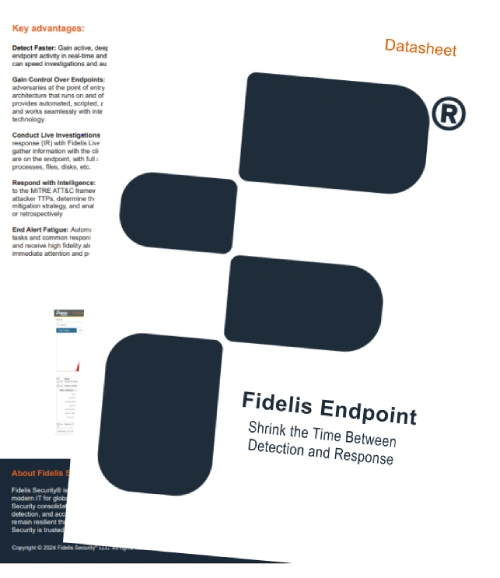
Fidelis Security is a leader in the development of enterprise-level cloud endpoint security, with advanced endpoint detection and response (EDR). Fidelis Endpoint® enables enterprises to detect, investigate and respond to threats on connected devices with real-time monitoring and detection, behavioral analysis, deep forensics and auto-remediation.
The solution offers endpoint isolation, threat of intelligence correlation, historical telemetry storage, cloud and on-premises EDR coverage. Fidelis also provides an AV-agnostic solution, enabling companies to boost security without disrupting their current security infrastructure.
With its emphasis on visibility, quick detection, and accelerated investigation, it’s a valuable choice for businesses looking for better cloud EDR and endpoint protection and response. Fidelis Security is an efficient and scaled-up solution to help organizations take the next level in cybersecurity to avoid antivirus only.
Final Thoughts
In the context of choosing an endpoint protection solution based on the cloud-based model, it is not only about blocking malware; but also, about applying a comprehensive and scalable approach to security of the enterprise.
The best solutions include real-time threat detection, behavioral analysis, AI-powered intelligence, automatic response, centralized visibility, lightweight design, and enhanced EDR features. Companies have to go beyond preventing attacks in a rapidly evolving threat environment they need to detect, respond, and maintain visibility of all endpoints. This is the power of cloud endpoint protection. By embracing next-generation cloud endpoint protection now, companies can better protect themselves from threats of the future.