

Key Takeaways
- The primary difference between EDR and antivirus is that while antivirus is about prevention, EDR is about detection, visibility, and response.
- Signature-based detection is the primary feature of traditional antivirus software, which detects known malware threats.
- EDR continuously observes endpoint activity and analyzes patterns of behavior to look for suspicious activity in real-time.
- Advanced threats, such as fileless malware, ransomware, and zero-day attacks, are a problem for antivirus.
- Traditional antivirus offers little post-attack visibility and investigation capabilities.
In the last decade, the cybersecurity landscape has changed drastically. But simple malware or computer viruses aren’t the only types of malwares that businesses are facing in today’s world. These are the tools that are used by today’s attackers, and the organizations they attack are of all sizes – ransomware, fileless malware, credential theft, phishing campaigns and advanced persistent threats. The shift has sparked a new debate within today’s cybersecurity ecosystem between EDR vs Antivirus.
Until recently, the only thing that needed to be effective in protecting an endpoint was antivirus software. It would be able to analyze files to detect malicious software, and it would be capable of removing malicious software from systems which are known to be malicious. But today’s attacks are more advanced and quicker than the old anti-virus software would have stopped. That’s where Endpoint Detection and Response (EDR) solutions have come into prominence.
Even though the goal of EDR platforms is to detect malware, they can also be configured as an ongoing end point monitoring solution that provides security teams with real-time alerts of suspicious activity, which in turn enables them to investigate and respond to activity on their end points. The difference between EDR and antivirus is crucial for organizations aiming for improved endpoint security and cyber resilience.
What is "Traditional Antivirus"?
Older antivirus software concentrates on looking for and blocking malicious files. The signature-based approach is used by most antivirus programs, which compare files to a database of signatures. In the event of a match, the program quarantines or deletes the file prior to it affecting the computer system. This strategy was effective for many years as most cyber threats were identified by known patterns of malware. Antivirus software was common on business and home computers as it was an easy solution to prevent the spread of known attacks.
With time attackers found methods to bypass signature-based defenses. These days, malicious software codes are modified automatically, and traditionally used antivirus programs are unable to detect that. Furthermore, cybercriminals are launching fileless attacks; attacks that do not leave a trace of the file in the system. These changes were a clear sign of the failing legacy antivirus. Most AV products are reactive but cannot always determine if a device has been compromised by an attacker. Unlike traditional antivirus software, which is designed to identify and eradicate known viruses, modern endpoint security solutions are designed to continuously identify and respond to threats.
What is EDR?
EDR (otherwise known as Endpoint Detection and Response) is a cybersecurity technology that offers constant visibility to endpoint activity. EDR is not just a signature-based antivirus solution; it does more than simply search for known malware signatures. Instead, it observes the behavior of the system, the activities of users, processes, and network connections, in real time.
Understanding the EDR vs Antivirus Difference is Important
The difference between EDR and antivirus can be seen in how they detect and handle threats. Though both technologies are aimed at protecting endpoints, they take very different approaches to cybersecurity threats.
1. Prevention Vs Detection
Traditional Antivirus Focuses on Prevention
Traditional antivirus is primarily designed to prevent malware infections and serves as a preventive security control. It analyzes files, matches them with a known database of malware, and prevents malware that matches a known signature. This kind of operation is capable of thwarting common and well recognized malware.
Traditional antivirus software does have some limitations in defending against zero-day attacks, file-less malware, APTs (advanced persistent threats). After a malicious user enters a system, their activities may not always be detected, particularly if they do not involve known malware that antivirus software can recognize.
EDR Uses Behavioral Detection
Unlike traditional antivirus solutions that rely primarily on known malware signatures, EDR uses behavioral detection to identify threats. Behavioral detection works by continuously monitoring endpoint activities and analyzing how users, applications, and processes behave. Instead of looking only for known malicious files, it searches for suspicious actions and patterns that may indicate an attack.
EDR continuously monitors endpoint activity in real time and compares observed behavior against normal system activity. This enables EDR platforms to detect suspicious activity even when no known malware signature is present. For example, if an unusual PowerShell process is launched, an attacker attempts to move laterally across the network, or a user’s account suddenly tries to escalate privileges; EDR can flag these behaviors as potential threats.
By focusing on behavior rather than just malware signatures, EDR can identify previously unknown threats, fileless attacks, and other advanced attack techniques that may bypass traditional antivirus solutions. This gives cybersecurity teams greater visibility into potential threats and improves their ability to detect and respond to modern cyberattacks.
2. Visibility
Limited Visibility in Traditional Antivirus
Another big shortcoming of conventional Antivirus is that it lacks detailed incident visibility. If an antispyware tool detects spyware, it typically only displays details of the spyware file. Security teams can be confident that malware has been blocked or quarantined, but they often lack visibility into:
- How the attacker was able to access the environment
- What actions were taken to the system?
- If any other endpoints were involved,
- If sensitive information has been accessed
Narrow scope makes it an extremely difficult environment for security teams to investigate an incident.
EDR Provides Deep Investigation Capabilities
The forensic visibility and investigation capabilities of EDR platforms are much more comprehensive. They keep extensive logs of endpoint activities to trace attack history and find out how threats traversed the environment.
EDR enables security teams to investigate:
- Which user accounts were targeted
- How attackers escalated privileges
- What commands were executed
- Whether lateral movement occurred
- Which systems communicated with malicious infrastructure
This visibility enables organizations to respond quicker and minimize the effects of cyberattacks.
Why Enterprises Prefer EDR?
One of the reasons why many businesses today are opting for the EDR over the traditional antivirus product is the greater visibility and response capabilities it offers. Cyber threats are constantly changing and can often bypass signature-based defenses. Through EDR, organizations can improve endpoint advanced threat detection, boost incident response, and boost overall endpoint security.
EDR vs Antivirus Solutions for Different Organizations
Traditional antivirus and EDR discussions are more pertinent due to modern cyber threats, not like traditional malware. The attackers are using reputable admin tools, which already exist in operating systems. The techniques are frequently known as “living off the land” attacks, since they do not leave behind any obvious files with malware.
Ransomware operators also employ sophisticated techniques to disable security software, steal credentials, and move laterally prior to encrypting data. In such instances, the standard antivirus solutions may not be able to identify the first attack stage. The aim of EDR solutions is to monitor these activities 24/7. They can identify and alert suspicious registry modifications, privilege escalation attempts, unusual command execution, and network activity.
Why Modern Security Teams Prefer EDR
The use of EDR is gaining traction among SOCs and enterprise cybersecurity teams because it provides significantly greater operational visibility across endpoints and systems. This enhanced visibility enables security teams to identify suspicious activity more quickly, leading to faster threat detection and response. Since EDR is continuously monitoring endpoint activity, suspicious activity can be detected before a major compromise occurs.
Another one of the noteworthy benefits is better incident response. Security teams can contain infected systems as soon as possible to prevent ransomware or lateral movement from spreading throughout the network.
One of the other areas of EDR excels is threat hunting. Analysts can seek out Indicators of Compromise (IoCs) in endpoint telemetry data, rather than waiting on endpoint AV system alerts. EDR platforms can also be used for forensic investigations. Attack timelines can be viewed; attack start and propagation within the environment can be identified. These features are particularly crucial for businesses with stringent compliance regulations or customer data which must be protected.
- Visibility and Detection
- Forensics, Response and Prevention
- Conduct Live Investigations
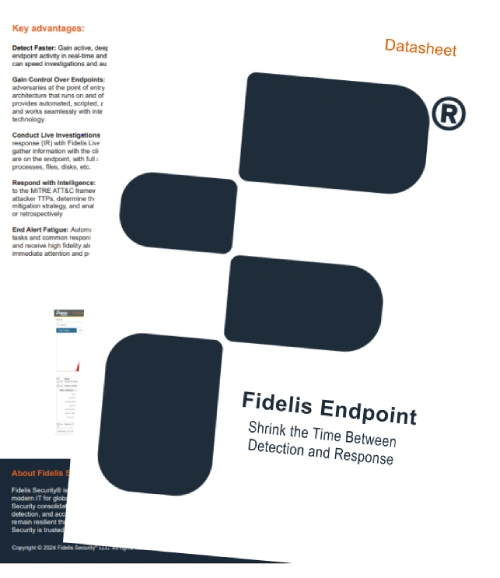
Fidelis Solutions and Advanced Endpoint Security
Today’s threat landscape is characterized by increasingly sophisticated cyberattacks that can target endpoints, networks, and cloud environments simultaneously. As a result, organizations need a holistic security strategy that provides visibility and protection across all attack surfaces. Fidelis Security addresses this need through its integrated security platform, which combines endpoint, network, and cloud security capabilities.
At the core of this approach is Fidelis Endpoint, an advanced EDR solution designed to detect, investigate, and respond to threats on endpoints in real time. Fidelis Endpoint goes beyond traditional signature-based detection by leveraging behavioral analysis, endpoint telemetry, and threat intelligence to identify suspicious activities, fileless malware, ransomware, and other advanced threats. By continuously monitoring endpoint activity, it provides security teams with the visibility needed to uncover attacks that may otherwise go unnoticed.
For organizations with mature security operations, Fidelis Endpoint can work alongside Fidelis Network® and other security tools to deliver a unified view of the threat landscape. Security analysts can correlate endpoint events with network activity, monitor lateral movement, investigate attack paths, and accelerate incident response. This integrated approach helps organizations reduce dwell time, improve threat detection accuracy, and respond more effectively to complex cyberattacks.
As cyber threats continue to evolve, many organizations are moving toward comprehensive security architectures that combine EDR, network detection and response (NDR), and threat intelligence. Fidelis Endpoint plays a critical role in this strategy by providing deep endpoint visibility and response capabilities while integrating seamlessly with broader security operations.
Final Thoughts
The EDR vs AV debate has revolutionized the cybersecurity scene. Although traditional antivirus is still important to block known malware, it is no longer enough for many businesses today.
The threats in the cyber world today are stealthy, more sophisticated, and faster than ever. Instead, the typical approach for attackers’ bypasses signature detection, and behavioral monitoring and real-time response are now vital to security teams. As opposed to classic AV solutions, EDR offers greater visibility, faster detection, and response to incidents. It helps organizations detect suspicious activity early, to thoroughly investigate attacks, and minimize the impact of security incidents.