
Key Takeaways
- Selecting the appropriate Cloud Security Posture Management (CSPM) tool can greatly improve visibility, reduce risk, and ultimately aid in securing the cloud security posture.
- Continuous monitoring and automated remediation are required to manage the ever-changing nature of cloud environments.
- Integration, scalability, and usability play a critical role in long-term CSPM success.
- Fidelis CloudPassage Halo is a security solution that delivers real-time visibility, compliance, and risk management.
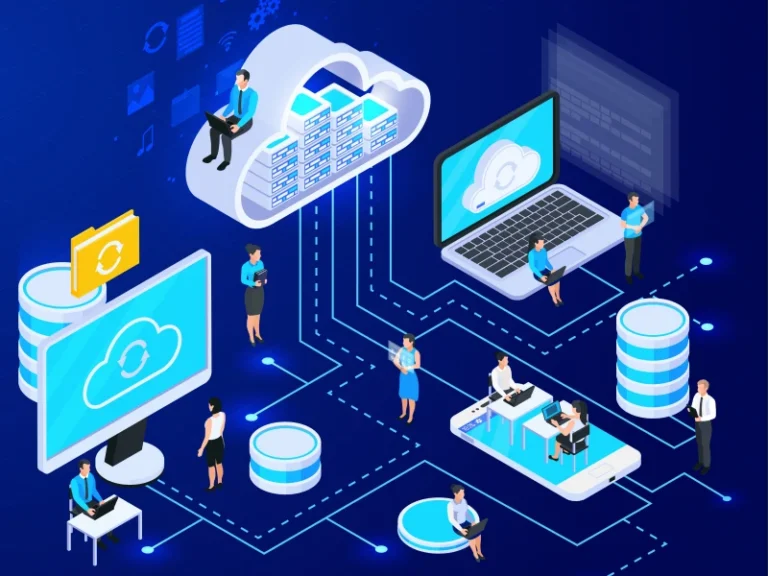
As cloud adoption accelerates, organizations are moving their most sensitive assets – applications, workloads and data – to highly dynamic environments. While the benefits of the cloud have been widely accepted, they have also introduced a number of new security challenges. Misconfigurations, lack of visibility and compliance gaps are just a few examples. Cloud Security Posture Management (CSPM) is one of the most important security controls for any organization looking to secure their cloud.
When comparing security options, we highly recommend reviewing these tips for choosing a cloud security posture management (CSPM) solution to avoid costly missteps and choose a platform that aligns with your future business requirements.
Understanding Cloud Security Posture Management (CSPM)
Cloud Security Posture Management (CSPM) monitors cloud environment 24/7, identifies potential risk and ensures that the organization is following the required security controls mandated by respective cloud providers. CSPM products look at risk at configuration level as opposed to detecting threats.
A CSPM solution monitors your cloud infrastructure for potential security risks such as exposed storage buckets, overly permissive access controls, or excessive visibility into sensitive workloads and applications. It then compares these problems to best practices and compliance standards. This constant monitoring makes sure that your security stays strong even as your cloud environment changes.
CSPM is a basic layer of cloud native security for large organizations. It helps teams keep track of things and stay in control without slowing down innovation.
Why Choosing the Right CSPM Solution Matters
Selecting the right CSPM tool is more than a technical decision; it directly impacts your organization’s risk exposure and operational efficiency. A poor choice of solution can make things harder for teams by creating blind spots, sending too many alerts, and not working with systems that are already in place.
Tips to choosing the right CSPM solution
The right solution, on the other hand, makes security management easier, helps with compliance, and speeds up the process of fixing security holes. It also helps security and DevOps teams work together, which is very important in today’s cloud environments.
One of the most important key considerations for cloud security posture management is understanding your own environment. Many organizations today operate across multiple cloud providers, combining public, private, and hybrid infrastructures.
A CSPM tool needs to be able to show you everything that’s going on in all these settings. If your company uses more than one platform, choosing a solution that only works with one cloud provider will quickly become a problem. Instead, look for platforms that make data the same across environments and give you a central dashboard to keep an eye on and control things. This is important for cloud security posture management vendors who are looking to bring CSPM to the enterprise, where the environments are much larger and more complicated.
1. Continuous Monitoring Is Non-Negotiable
Cloud environments are constantly changing. New resources are deployed, configurations are updated, and permissions are modified, often multiple times a day. In such a dynamic setting, periodic scans are not enough. A good Cloud Security Posture Management solution should keep watching. Find problems immediately. This means that the CSPM solution finds risk the moment they happen, not after someone has already taken advantage of them. Getting warnings away also helps us act faster, which reduces the time that we are in danger. A strong CSPM solution is very important. This capability is especially important when dealing with cloud threat detection, where delays can lead to serious security incidents.
2. Look Beyond Detection to Remediation
Most organizations are biased towards the detection capabilities of CSPM platforms, and risk exposure identification is often given more importance than risk remediation. CSPM is a security tool that helps identify and classify risk. But the real value of CSPM comes down to how you are able to remediate those risks. In an ideal world, your CSMS/CSPM solution would provide automated remediation of those risk findings.
3. Evaluate Compliance Capabilities Carefully
The primary reasons for deploying a CSPM solution are compliance. There are multiple industries for which compliance is an issue, and CSPM can be a very effective tool in ensuring that there is no exposure to the cloud. This is particularly true in financial, healthcare, and e-commerce businesses. Not all products are made equal to CSPM.
When reviewing cloud security posture management (CSPM) evaluation criteria for features, don’t forget to focus on compliance Here are a few things to look for in a Cloud Security Posture Management (CSPM) tool:
- Configuration to compliance frameworks Almost all compliance frameworks specify that the configuration of your cloud must adhere to a set of predefined settings. Therefore, you’ll want to ensure that your CSPM tool can discover the configuration of your cloud, as well as that it is aware of the compliance frameworks that are relevant to your use case (such as GDPR, HIPAA or PCI DSS).
- Audit-ready reports can be another important feature of your CSPM solution, whether you need to report on compliance or security audits. You will want reports that have all the necessary information so that auditors can verify that all recommended fixes have been implemented. Compliance is important, but there are so many more important things you need to focus on. While auditing your cloud environment compliance on a one-time basis is a start, your cloud environment will continue to change, so compliance monitoring needs to take place on an ongoing basis.
4. Integration Determines Long-Term Success
A CSPM tool does not exist in isolation to your existing security and DevOps infrastructure. Rather, it should work in conjunction with such components and tools as your SIEM, Identity and Access Management (IAM) solutions and CI/CD tools.
Infosec data from isolated point products is siloed and hence not comprehensive. An integrated security solution provides a 360-degree view of the environment and enables all teams to respond effectively. This is why integration is one of the key criteria when choosing a cloud enterprise security provider.
5. Prioritization Is Just as Important as Detection
One of the biggest challenges we see in cloud security is alert fatigue. When a Cloud Security Posture Management (CSPM) tool is reporting on everything, all the time, and there is no additional context or context provided for what is important, what is not, what requires immediate attention and what can be addressed later, the security team can become overwhelmed and unable to act meaningfully on any of the information being provided.
More advanced CSPM solutions will provide context-aware risk prioritization to help organizations improve how they respond to vulnerabilities based on the actual risk to their assets and data. In today’s systems landscape with increased complexity, especially in cloud-based deployments, organizations need help identifying what really matters to mitigation.
Such advanced CSPM solutions will consider aspects such asset criticality, attack surface exposure, the business or application impact, and others to better categorize risk and streamline responses accordingly. This enables teams to priorities and remediate high risk vulnerabilities first, working more efficiently and reducing the chance of important threats being missed.
6. Scalability Should Not Be an Afterthought
As your organization grows, so will your cloud infrastructure. What works for a small environment may not be sufficient for a large enterprise. Scalability is an important consideration when selecting a CSPM solution. The platform must be able to scale to meet growing workloads, manage multiple accounts, and support increasing numbers of resources. It is very important, especially for businesses that look for long-term solutions rather than short-term repairs.
7. Usability Drives Adoption
No matter how many features a CSPM solution has, if it is difficult to use, it will always fail. A security tool should ease your work, not make it more complicated. A simple user interface, clear visualization of the information on the dashboard, and meaningful reporting can have a huge impact on the adoption of a solution across different teams. When security, DevOps and compliance teams can use a single platform without needing an IT science degree, the communication between teams flows and vulnerabilities are addressed in a timely manner. The less time a team has to spend on training means the quicker the team will be able to get value from the solution.
8. Agentless vs Agent-Based Approaches
Another important consideration is the deployment model. Agentless architectures are available in many modern CSPM tools. This means that businesses can keep an eye on their cloud environments without having to install software on every resource.
Agentless solutions are usually easier to set up and keep up with, which makes them perfect for environments that change all the time. But in some cases, agent-based methods may give you a better view. The choice depends on what you need, but for most businesses, agentless CSPM is a good balance between visibility and operational efficiency.
Evaluating Fidelis CloudPassage Halo
When organizations begin to evaluate cloud security posture management, one solution that often comes up is Fidelis CloudPassage Halo.
Fidelis CloudPassage Halo provides complete visibility into cloud workloads, along with real-time monitoring and automated compliance enforcement. It is designed to help organizations detect misconfigurations, enforce policies, and respond to risks efficiently.
What makes it particularly relevant is its ability to combine security depth with ease of use, making it suitable for organizations that want strong protection without excessive complexity. It also integrates well with broader security ecosystems, which is essential for modern enterprises.
- Cloud-friendly Deployment
- Hyper-scalable Workload Protection
- Agentless Cloud Posture Management
Common Pitfalls to Avoid
A lot of companies pick up a CSPM tool too quickly without fully understanding what they need. This often causes problems like not being able to scale well, not being able to integrate, or not being able to see everything.
Another common mistake is only thinking about the price. Budget is important but picking a cheaper option that doesn’t have all the important features can lead to more risks and costs in the long run. Skipping pilot testing is another risk. Testing a solution in a real-world environment helps identify potential challenges before full deployment.
Final Thoughts
When picking up the best CSPM solution, you need to carefully balance its features, scalability, and ease of use. Organizations can make smart choices that improve their overall security posture by following these tips for picking cloud security posture management solutions.
The importance of CSPM will only grow as cloud environments change. If you choose the right solution today, your business will be ready for future problems while still being safe, compliant, and efficient.