
Summary
CVE-2025-24201 is an out-of-bounds write bug in WebKit that lets attackers escape the Web Content sandbox. It’s already exploited in targeted attacks and affects iOS, iPadOS, macOS, Safari, visionOS, and watchOS. Apple has issued fixes, so updating quickly is strongly advised.
Urgent Actions Required
- Update all affected Apple devices and software to the latest fixed versions immediately.
- Use strict web filtering and monitor for unusual web activity that may indicate attacks.
- Patch internet-facing systems first to reduce exposure to active attacks.
Which Systems Are Vulnerable to CVE-2025-24201?
Technical Overview
- Vulnerability Type: Out-of-Bounds Write in Web Content Processing (CWE-787)
-
Affected Software/Versions:
- iOS – versions prior to 18.3.2, 16.7.11, and 15.8.4
- iPadOS – versions prior to 18.3.2, 17.7.6, 16.7.11, and 15.8.4
- macOS (Sequoia) – versions prior to 15.3.2
- Safari – versions prior to 18.3.1
- visionOS – versions prior to 2.3.2
- watchOS – versions prior to 11.4
- Attack Vector: Network (web content)
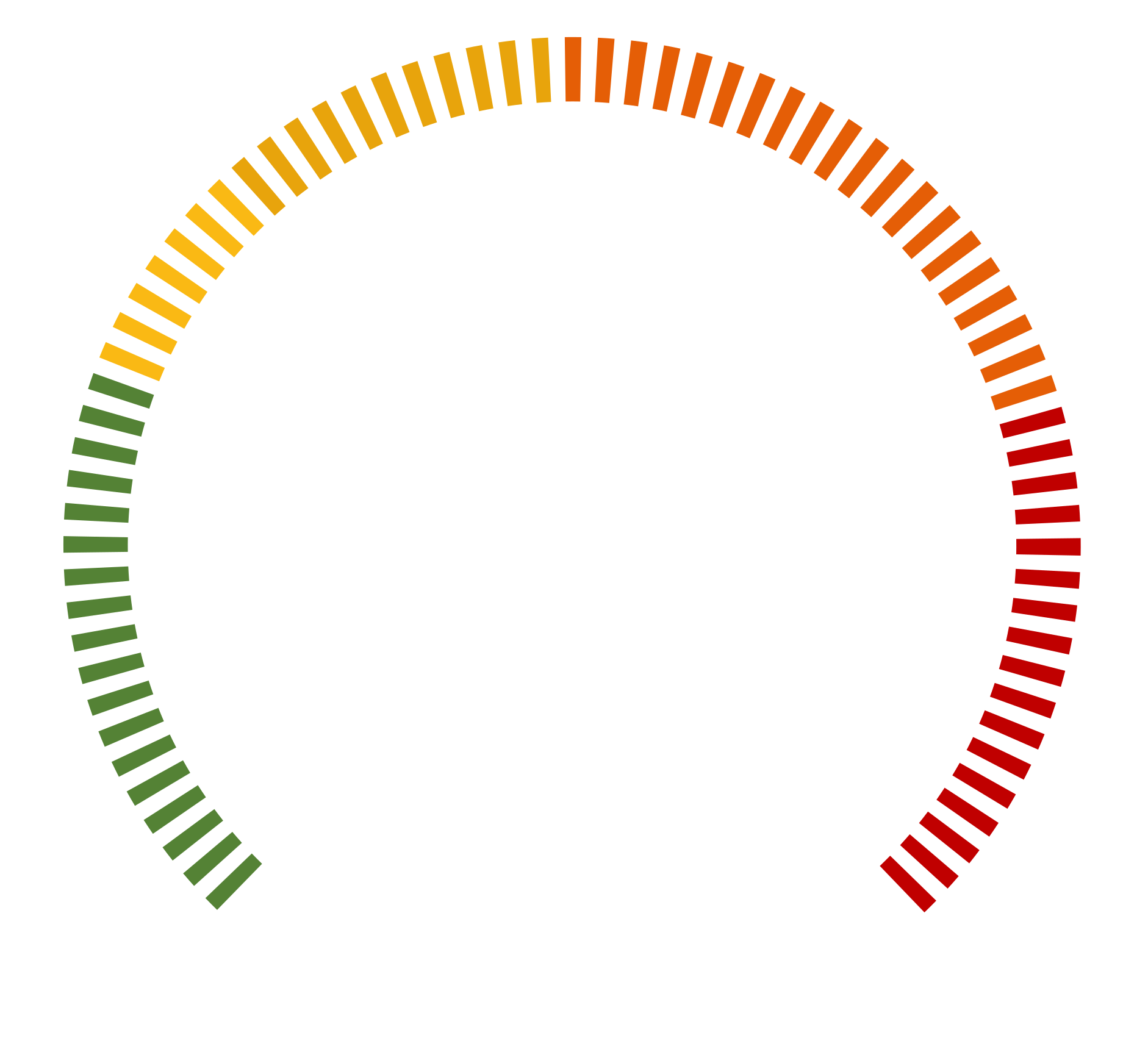
- CVSS Score: 10
-
CVSS Vector: v3.1
- Attack Vector: Network
- Attack Complexity: Low
- Privileges Required: None
- User Interaction: None
- Scope: Changed
- Confidentiality Impact: High
- Integrity Impact: High
- Availability Impact: High
- Patch Availability: Yes, available
How Does the CVE-2025-24201 Exploit Work?
The attack typically follows these steps:

What Causes CVE-2025-24201?
Vulnerability Root Cause:
CVE-2025-24201 is a WebKit out-of-bounds write vulnerability brought on by well-constructed web content. It has already been used in targeted attacks and permits malicious pages to slip out of the Web Content sandbox because of incorrect memory handling.
How Can You Mitigate CVE-2025-24201?
If immediate patching is delayed or not possible:
- Avoid untrusted or risky web content to reduce exposure.
- Install the latest security updates on all affected Apple platforms as soon as possible.
Which Assets and Systems Are at Risk?
Asset Types Affected:
- Apple Devices and Platforms – iOS, iPadOS, macOS, visionOS, watchOS, and Safari vulnerable before their respective fixed updates.
- Linux Distributions Using WebKit Packages – Systems running vulnerable versions of webkit2gtk, webkitgtk, QtWebKit, or wpewebkit prior to patched releases.
Exposure Level:
- Devices or systems that load malicious web content – since exploitation requires processing attackercrafted content through WebKit.
- Unpatched Apple and Linux environments – remain exposed until the corresponding platform or package updates are applied.
Will Patching CVE-2025-24201 Cause Downtime?
Patch application impact: Low. Fixing it simply requires updating Apple platforms or Linux WebKit packages, with minimal downtime.
How Can You Detect CVE-2025-24201 Exploitation?
-
Exploitation Signatures:
- Trigger: malicious web content designed to exploit a WebKit outofbounds write.
- Outcome: memory corruption allowing code to run outside the Web Content sandbox.
-
MITRE ATT&CK Mapping:
T1190 – Exploit Public-Facing Application -
Behavioral Indicators:
- Web Content sandbox being bypassed or otherwise compromised.
- Arbitrary code execution occurring as a result of WebKit processing attacker-controlled content.
- Targeted exploitation activity reported against specific individuals or devices.
-
Alerting Strategy:
- Priority: Critical
Trigger alerts for:- Any indications of compromise or unusual behavior that follow rendering of external web content on affected WebKit components.
- Detection of confirmed public exploit artifacts (e.g., known GitHub PoC) being used in your environment.
- Reports of sandbox escape or unexpected code execution on unpatched Apple or WebKit-based Linux hosts.
- Priority: Critical
Remediation & Response
Rollback Plan:
- If the update introduces operational issues, revert to the prior stable OS or WebKit package version.
- Record the rollback (version restored, timestamp, and engineer responsible) in your standard change-tracking process.
Incident Response Considerations:
- Treat all unpatched systems as immediately at risk due to active exploitation.
- Prioritize reviewing systems that rendered external web content before patching.
- Gather available logs tied to WebKit execution or browser activity to assess whether malicious web content was processed.
- After updates are applied, ensure all relevant devices have received the fix and confirm patch coverage across Apple and Linux environments that rely on WebKit.
Compliance & Governance Notes
-
Audit Trail Requirement:
- Maintain records showing when patched Apple OS versions and updated WebKit packages were deployed across affected systems.
- Track which devices or environments received the fixes (including platform version and update completion time).
- Document any pre-patch exposure window, especially for systems that processed web content while running vulnerable versions.
-
Policy Alignment:
- Update internal vulnerability-management procedures to ensure rapid rollout of security fixes for WebKit components across Apple and Linux environments.
- Strengthen policies requiring prompt updates when advisories indicate that a flaw is “actively exploited.”
- Ensure operational teams verify that no devices remain on vulnerable Apple OS versions or outdated WebKit package builds.
Where Can I Find More Information on CVE-2025-24201?
CVSS Breakdown Table
| Metric | Value | Description |
|---|---|---|
| Base Score | 10.0 | Critical-severity vulnerability with maximum impact and exploitability |
| Attack Vector | Network | Can be exploited remotely over a network connection |
| Attack Complexity | Low | Does not require special conditions; the attack is straightforward |
| Privileges Required | None | No authentication or prior access is needed to exploit |
| User Interaction | None | No user involvement (e.g., clicks or actions) is required |
| Scope | Changed | Successful exploitation can affect components beyond the vulnerable one |
| Confidentiality Impact | High | Can lead to exposure of sensitive or protected information |
| Integrity Impact | High | Allows unauthorized modification or tampering of data |
| Availability Impact | High | Exploit can significantly disrupt system availability or functionality |