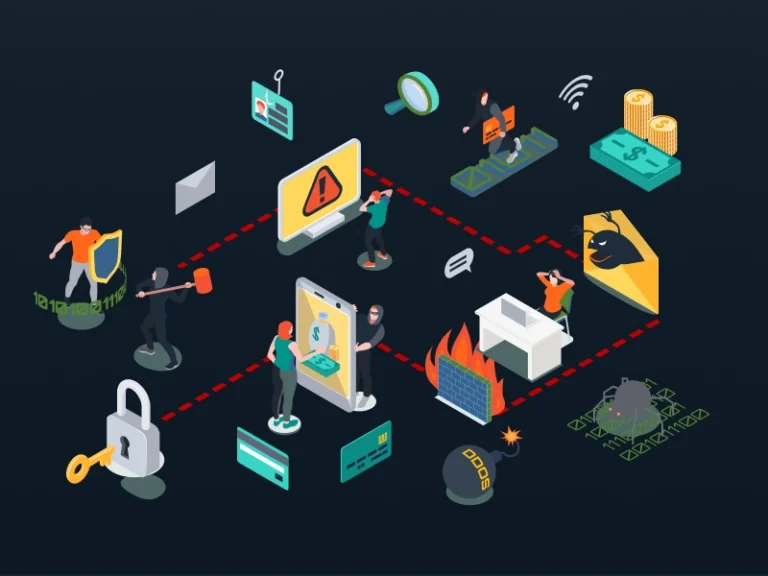

Threat Detection Defined
Threat detection is the ability of a system or process to identify any security threat, suspicious activity, or malicious activity within an organization’s network, systems, cloud environments, applications and endpoints before it can cause harm. It allows security teams to detect cyberattacks in a timely manner and prevents ransomware attacks from having long residence times, insider threats, and unauthorized access.
Today’s threat detection is a combination of these technologies into one solution that can detect known and unknown threats in real time – including behavioral analytics, machine learning, threat intelligence, anomaly detection, network traffic analysis, endpoint monitoring, and automated correlation engines.
Why Is Threat Detection Important?
Traditional security tools are usually based on signatures and rules that can’t identify advanced or stealthy attacks. Today’s cybercriminals employ various techniques to evade traditional defenses, including lateral movement, encrypted communication, credential abuse, and fileless malware. Threat detection assists organizations:
- Detect attacks early before major damage occurs
- Identify suspicious user or system behavior
- Reduce ransomware and data breach risks
- Monitor insider threats and unauthorized access
- Improve incident response speed
- Gain visibility across cloud, network, and endpoint environments
- Minimize attacker dwell time inside the environment
How Threat Detection Works
Threat detection solutions continuously monitor network traffic, endpoints, cloud workloads, user activities, and system logs to identify indicators of compromise (IOCs) and abnormal behavior.
The process generally includes:
-
Data Collection
Security tools gather logs, telemetry, network packets, endpoint events, and authentication activities from across the environment.
-
Behavior Analysis
Systems establish a baseline of normal activity and detect deviations or anomalies that may indicate malicious behavior.
-
Threat Correlation
Security platforms correlate multiple weak signals and threat indicators to identify suspicious patterns across the attack lifecycle.
-
Alerting and Investigation
When suspicious activity is detected, alerts are generated for security analysts to investigate and respond.
-
Automated Response
Some platforms automatically isolate devices, block malicious traffic, quarantine files, or stop suspicious processes.
Common Threat Detection Techniques
-
Signature-Based Detection
Detects known malware, malicious files, or attack patterns using predefined signatures or rules. -
Behavioral Detection
Identifies unusual activity by analyzing user and system behavior patterns. -
Anomaly Detection
Use statistical analysis and machine learning to identify deviations from normal network or endpoint activity. -
Threat Intelligence-Based Detection
Uses external threat intelligence feeds and indicators of compromise to identify known malicious domains, IP addresses, hashes, and tactics. -
Machine Learning Detection
Applies supervised and unsupervised machine learning models to identify previously unseen threats, malicious behaviors, and advanced attack techniques.
Types of Threats Detected
Threat detection systems can identify various cyber threats, including:
- Malware and ransomware
- Phishing attacks
- Insider threats
- Advanced Persistent Threats (APTs)
- Credential theft
- Command-and-control (C2) communication
- Lateral movement
- Data exfiltration
- Zero-day attacks
- Fileless malware
- Unauthorized access attempts
- Threat Detection vs Threat Prevention
Threat Detection Challenges
Organizations commonly face several threat detection challenges, including:
- Alert fatigue caused by excessive notifications
- Limited visibility across hybrid and cloud environments
- Encrypted traffic inspection limitations
- Shortage of skilled security analysts
- High false positive rates
- Rapidly evolving attack techniques
- Complex multi-cloud infrastructures
Best Practices for Effective Threat Detection
To improve threat detection capabilities, organizations should:
- Monitor activity in the network and on endpoints - constantly
- Apply behavioral analytics and machine learning.
- Enlist threat intelligence feeds to help. Make use of threat intelligence feeds.
- Deploy endpoint detection and response (EDR)
- Institute network detection and response (NDR)
- Automate threat correlation and response workflows
- Conduct regular threat hunting exercises
- Use current security policies, patch management
Related Cybersecurity Terms: