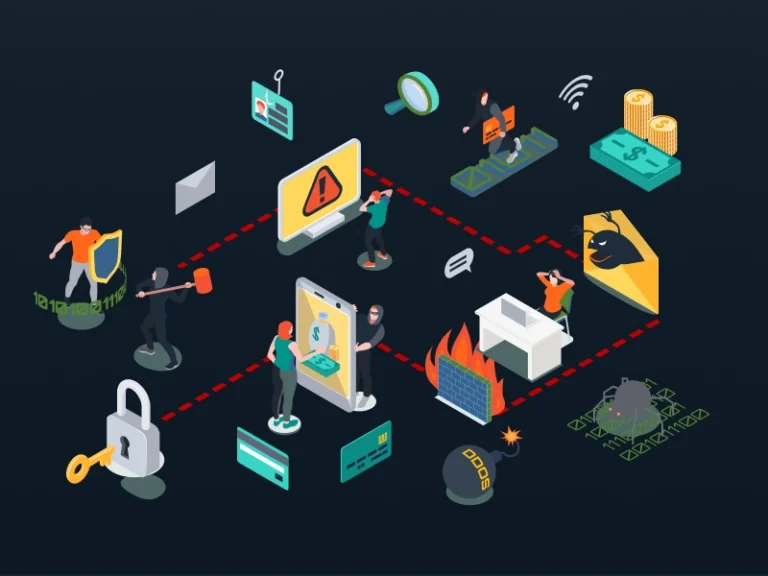

Active defense is a proactive security strategy that is aimed at detecting, disrupting and identifying cyber threats before they cause significant damage. Active cyber defense is constantly monitoring networks, analyzing attackers’ actions, and reacting to suspicious activity in real time, unlike traditional security methods that are primarily focused on blocking attacks.
What is Active Cyber Defense?
Active defense is the convergence of technologies, intelligence, and automation to discover threats that have infiltrated a network. Organizations proactively look for indicators of attack rather than waiting for alerts to be raised, and they undertake the following practices:
- Threat hunting
- Deception technology
- Behavioral analytics
- Automated incident response
- Attack surface monitoring
- Threat intelligence integration
The main aim is to decrease the time that an attacker spends inside the environment, prevent them from moving laterally, and make them more visible throughout the environment.
Active Cyber Defense vs Passive Cyber Defense
A typical example is between active and passive cyber defense. Passive defenses are traditional protective controls such as:
- Firewalls
- Antivirus software
- Patch management
- Access control systems
These defenses are primarily defensive, in that they help block known threats. But today, the attacks often circumvent static controls with the help of phishing, stolen credentials, or with the help of AI-driven malware.
Active defense is more than just prevention; it is ongoing surveillance and response to suspicious activity. Active defense will proactively identify threats and contain them earlier, whereas passive defense will wait until it is attacked and trigger alerts.
Common Active Defense Techniques
There are several strategies that organizations employ to defend against cyber-attacks, some of which are active:
-
Threat Hunting
Security teams take a proactive approach when examining systems to look for hidden threats that may not alert. -
Deception Technology
Whether it's a fake server, credentials, or application, decoys trick attackers into exposing their identity. -
Automated Response
Security platforms can automatically segment infected systems or block malicious activity as it happens. -
Threat Intelligence
Organizations are picking up new attack methods quicker via external and internal intelligence feeds.
How does the Active Cyber Defense Certainty Act work?
ACDCA (Active Cyber Defense Certainty Act) is a proposed U.S. law which aims to define the legal limits of some cybersecurity measures. The bill sought to give some rights for defensive measures, including collecting information about intruders, or for tracking malicious activity, while not granting “hack back” rights. The Act also contained tight restrictions to stop organizations from harming other third-party systems or attacking others’ systems.
Final Thoughts
The growing sophistication of cyber-attacks has led to active defense measures by organizations to bolster security. Active cyber defense is an indispensable component in modern cybersecurity, as it enhances visibility, speeds up detection of threats, and increases response speeds against the attacks of the modern world.