
Key Takeaways
- CSPM Integrations create a centralized hub that brings together cloud security information for enhanced monitoring and immediate threat response.
- The system automates both threat detection and threat remediation processes, which lead to decreased need for human work and decreased chance of errors.
- The main difficulties that users face include problems with duplicate alerts and missing contextual information and difficulties that arise from using multiple cloud services.
- Fidelis Halo® platform makes it easier to connect with other systems through its enhanced contextual information and automated processes and its combined cloud security management features.
Modern cloud environments are no longer simple or centralized. Organizations work on multiple platforms nowadays which include cloud, private cloud, and on-premises systems.
In this kind of setup, Cloud Security Posture Management (CSPM) integrations are important as they help keep security strong and make sure everything follows the rules.
When CSPM is isolated, it generates a gap in monitoring; therefore, even the best ones may fail. CSPM integrations help fill these gaps. They make sure security works across all platforms. This guide explores how CSPM integrations work, why they matter, and the common challenges organizations face when implementing them.
Understanding Cloud Security Posture Management Essentials
The new cloud environments are not basic and centralized anymore. Organizations are currently working on multiple platforms, including public, private, and on-premises cloud systems. CSPM Integrations would be needed in such a landscape to ensure a high level of security, visibility, and compliance. While even the most advanced Cloud Security Posture Management (CSPM) solutions cannot ensure the totality of cloud security on their own, failure to integrate them with other tools and systems exposes a tremendous amount of risk that is left unmonitored and unaddressed.
This guide will introduce CSPM integrations, explain their value, and discuss some of the pain points organizations encounter when attempting to tie in these services.
What Are CSPM Integrations?
CSPM Integrations allow you to link your CSPM platform to your other security & operations tools: – SIEM, SOAR, DevSecOps pipelines, Identity & Access Management, and Ticketing platforms.
By integrating these solutions, an organisation can unify its security information, automate its responses, and make the most out of the CSPM’s findings.
Key Benefits of CSPM Integrations
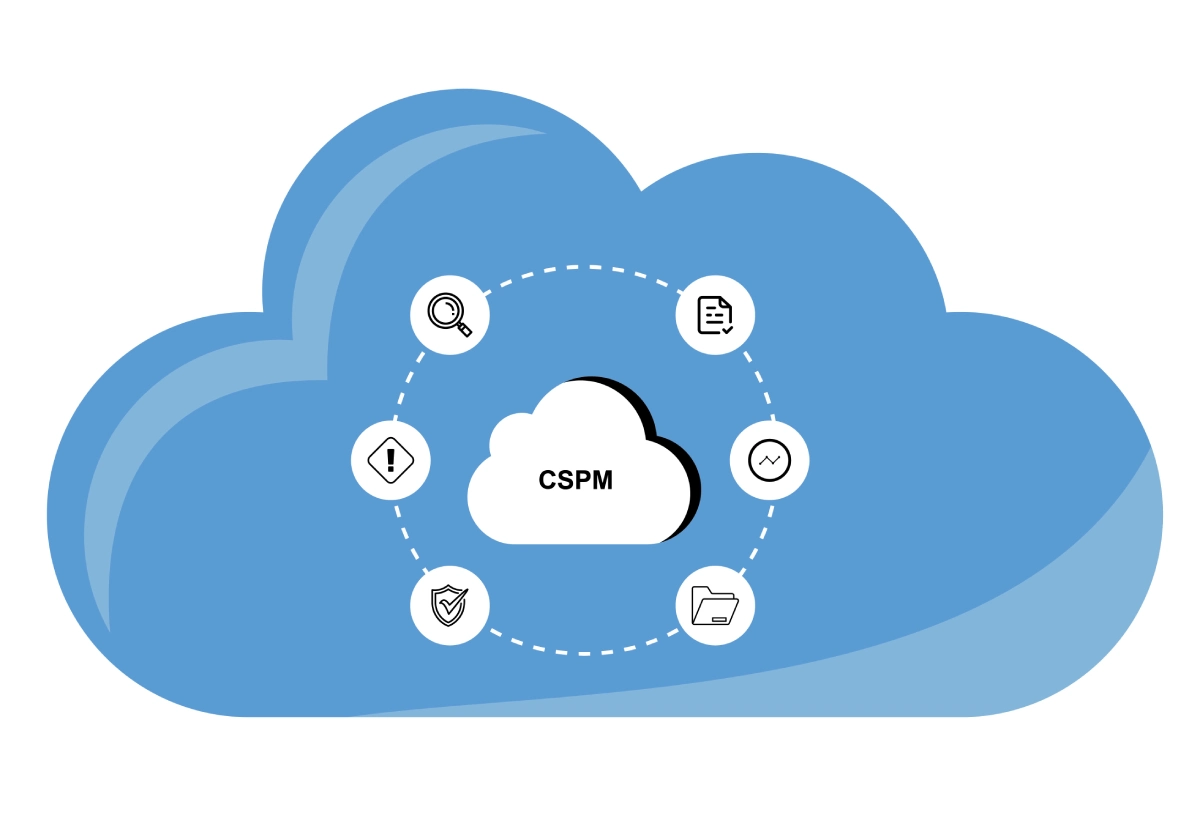
CSPM integrations give you a single-pane-of-glass view of your security posture. With CSPM integrations, you can quickly react to security findings as they occur, automate manual workflows, and extend the capabilities of your existing security investments. They enable better compliance, reduce manual labor, and give you a more robust and scalable cloud security architecture.
1. Centralized Visibility Across Environments
CSPM integrations are a keyway to bringing together different security data sources. In complex multi-cloud environments, security related information is spread far and wide across the infrastructure and applications. Integrating CSPM findings into a single source helps to obtain a complete picture of an organization’s security situation and to remove blind spots in the monitoring process that can make it harder to discover potential threats.
2. Faster Detection and Response
CSPM can let you know when your cloud environment has been compromised, but it’s often up to other security tools to notify you of any associated alerts based on that vulnerability. It’s really the integrations and tools that make the alert action-able and are in fact what allow the alerts to actually affect your environment and increase the productivity of your SecOps teams.
For example, a CSPM tool that catches potential ransomware threats might alert a CSMT or cloud security monitoring tool that was integrated with the corresponding SIEM or SOAR systems. This would then automate the remediation steps required to correct any exposures before any future attacks happen.
3. Automation of Security Operations
Automation is one of the key values that we can get from a CSPM integration. Most of the work that security teams do is automated, and the purpose of this work is to either automatically fix misconfigurations or to automatically create tickets so that it’s not a human being that has to do the same job repeatedly.
4. Improved Compliance and Reporting
CSPM integrations help maintain compliance with industry regulations. By integrating your CSPM tools with report sites, compliance scans become automated, and audit reports become ready.
How to Integrate CSPM Findings into Centralized Security Dashboards
The process of developing operational intelligence from cloud security data needs scientists to learn how to use CSPM results in combination with main security dashboards. The system shows complete operational status to users while providing them with tools that let them make quick decisions and rank security threats and conduct security tasks with efficiency. The following section presents a detailed explanation of the procedure.
1. Choosing the Right Integration Platform
The first step is to choose a platform which will function as the central hub for your CSPM data. Organizations use SIEM platforms and SOAR tools or custom-built dashboards based on their size and security maturity. Your selected platform needs to work with your current security systems while enabling automatic collection of cloud security information. The platform must demonstrate capabilities to process large data volumes and deliver immediate results while enabling multiple cloud provider system connections. A well-chosen integration layer becomes the foundation for effective visibility and response.
2. Leveraging APIs for Data Collection
Modern cloud security posture management platforms for API integrations play a crucial role in data collection. APIs allow CSPM tools to send findings directly to centralized dashboards in real time. This ensures that security teams always have access to the latest information.
In the API economy, it is possible to tailor your view of the information that is being made available by configuring what is collected and how it is presented. In large-scale IT systems, for example, the IT operations staff in different departments may be interested in seeing different sets of key performance indicators.
3. Data Normalization for Consistency
Cloud Formats can be a real problem in multi-cloud environments – vendors use different terms, structures, and metrics to define what is contained in their respective data formats. Unless a vendor’s data is normalized, it is next impossible to compare or meaningfully analyze it against anything else.
Data normalization is the process of transforming or adapting a particular set of data to consistent patterns throughout a database, and in CSPM, the resulting data is presented in a standard format, allowing security teams to gain insight into the data, spot trends and make strategic decisions more efficiently. Moreover, with normalized data from CSPM, reporting and analytics will be more accurate.
4. Implementing Alert Prioritization
The team needs to establish proper priorities because all security alerts do not need instant response. The CSPM tools produce excessive alerts which overwhelm teams because they lack proper prioritization. The implementation of risk scoring together with prioritization mechanisms enables organizations to concentrate their efforts on their most important issues.
Reduces alert fatigue in your system while ensuring critical security issues are escalated to the right teams at the right time. Enhanced Prioritization increases team productivity and efficiency by automatically filtering out less relevant, non-essential, or redundant alerts.
5. Automating Workflows and Responses
Automation is a key part of CSPM integration and a very valuable feature. In Security Console, one has the ability to collect data from multiple cloud providers and then prioritize the information to create actionable alerts. Once this information has been collected and prioritized, the platform can then automate remediation tasks for specific types of alerts via the use of automated workflows.
For example, critical misconfiguration can automatically create a ticket, send notifications to affected teams, or even begin to remediate the issues. Automation decreases time spent on mundane tasks, cuts the time between initial detection and first response, as well as improves response consistency.
6. Continuous Monitoring and Optimization
Integration is not a single process. With the development of cloud environments, organizations need to keep on monitoring and refining the integration strategies. This consists of maintaining APIs, optimization of rules in alerting, and enhancement of data correlation methods.
These measures will assist companies to deploy the outcomes of CSPM under centralized security dashboard and achieve success in transforming disaggregated data into actionable intelligence.
This improves visibility as well as boosts overall cloud security because more effective and quicker responses are more coordinated.
Common Challenges in CSPM Integrations
CSPM integrations tend to cause complexity because of multi-cloud environments, the presence of many different APIs, and different security settings between platforms. Problems such as duplication of alerts, data inconsistence, and maintaining overheads also bother security teams. In the absence of a plan and qualified resources, such obstacles can make visibility poor, response time slower, and overall performance of the cloud security operations curtailed.
-
Multi-Cloud Complexity
One of the most significant challenges is managing integrations across multiple cloud providers. Each platform has its own APIs, configurations, and security controls, making integration complex and time-consuming. -
API Sprawl
As organizations integrate more tools, the number of APIs increases. This can lead to difficulties in managing integrations and maintaining consistent data flow. Frequent API updates can further complicate the process. -
Alert Duplication and Alert Fatigue
A major issue in common challenges in CSPM integrations, maintenance of alert duplication, is the presence of duplicate alerts. When multiple tools report the same issue, it creates noise and overwhelms security teams. This can result in important alerts being overlooked. -
Lack of Skilled Expertise
CSPM integrations require expertise in three fields that involve the knowledge of cloud platforms and API technology, and security systems. There are also problems with the implementation of integration in organizations as they do not have trained specialists to perform these works. -
Legacy System Integration
Old systems are not always compatible with new CSPM tools. This causes data silos and constrains automation and decreases the overall efficiency of security operations. -
Scalability Issues
The amount of data and alerts grow as the number of cloud environments extends. Integrations may be slow and inefficient without proper planning, thus affecting performance and response times. -
Resource and Cost Limitation
CSPM integrations are costly to implement in terms of resources, equipment, and staff. These costs may be a tremendous obstacle to smaller organizations.
Best Practices for CSPM Integrations
To get the most value from Cloud Security Posture Management (CSPM) integrations, organizations should follow structured implementation and monitoring practices. Proper integration helps maintain consistent visibility across cloud environments and reduces security gaps. Following best practices also ensures that security teams can detect and respond to risks more efficiently.
-
API-First Approach
Choose platforms with strong API capabilities to enable smooth data exchange, customization, and seamless integration across tools. -
Prioritize Automation
Automate data collection, alerting, and remediation to reduce manual effort and improve response time and consistency. -
Effective Alert Management
Filter noise, remove duplicate alerts, and prioritize critical issues so security teams can focus on what matters most. -
Ensure Tool Compatibility
Make sure integrations work well with SIEM, SOAR, and DevOps tools to avoid data silos and operational disruptions. -
Enable Unified Visibility
Use integrations that provide a centralized view across multi-cloud and hybrid environments for consistent monitoring and control.
Evaluation Criteria for CSPM Integrations
When selecting CSPM integrations, organizations should evaluate how well the solution connects with their existing cloud platforms and security tools. Important factors include integration compatibility, ease of deployment, scalability, and the ability to provide centralized visibility across environments. Choosing the right integration helps security teams manage risks more effectively and maintain a strong cloud security posture.

-
Multi-Cloud Support
Ensure the solution supports multiple cloud providers with consistent security coverage. -
Scalability and Performance
Evaluate whether the integration can handle growing workloads without performance issues. -
Ease of Implementation
Choose tools that are easy to deploy, configure, and manage to reduce time and cost.
The Future of CSPM Integrations
The CSPM integrations are evolving alongside the further evolution of cloud security. New methods are moving towards integrated systems that have a few security functions on a single platform. The technologies that are gaining popularity are AI-based risk analysis and identity-focused security models.
Such innovations are also directed at the automation of improvement, decreasing complexity, and obtaining a better understanding of the security risks. The role of CSPM integrations will continue to be crucial since more organizations are continuing to use cloud technologies.
Conclusion
CSPM Integrations are not optional anymore in the modern intricate cloud environments. They allow organizations to consolidate security information, automate business processes, and reduce their responsiveness to the threat. There are such challenges as multi-cloud complexity, API sprawl, and duplication of alerts, although with the appropriate strategies, they can be managed.
By focusing on integration, automation, and scalability, organizations can unlock the full potential of CSPM tools and build a stronger, more resilient security posture.