

Key Takeaways
- Apply 10 best practices to strengthen enterprise network visibility, behavioral detection, alert prioritization, and automated response.
- Tailor NDR use cases to industries including BFSI, healthcare, government, IT, manufacturing, retail, and energy.
- Integrate NDR with SIEM, EDR, SOAR, and threat intelligence for a more complete security view.
- Use continuous threat hunting and MITRE ATT&CK mapping to identify detection gaps and strengthen coverage.
- Analyze encrypted traffic, scale deployments, and continuously optimize detection performance to reduce security blind spots.
Last Updated: September 7, 2026
The cybersecurity landscape evolves rapidly. Threat actors develop sophisticated methods to breach defenses. Network Detection and Response (NDR) has emerged as a critical component in modern security solutions, identifying and mitigating threats traditional defenses miss.
Enterprise network detection and response has moved from a niche control to a core layer of network threat detection monitoring. Market sizing estimates vary by research firm: Mordor Intelligence puts the 2026 NDR market at $4.13 billion, growing to $5.59 billion by 2031, while MarketsandMarkets projects the market to grow from $3.68 billion in 2025 to $5.82 billion by 2030[1][2]. This points to continued growth in NDR adoption as organizations close the visibility gaps that perimeter-only tools leave open.
Understanding Network Detection and Response
NDR monitors network traffic for suspicious activities, facilitating rapid network threat detection and incident response. It uses signature and non-signature-based methods such as machine learning and behavioral analytics to identify threats and malicious activities on the network and respond to them.
Unlike legacy signature-reliant systems, modern NDR employs advanced technologies to identify anomalous behaviors indicating breaches. NDR consolidates various data sources to provide critical security information, enhancing the detection capabilities of security solutions.
Implementation involves five key steps:
- Network traffic monitoring from various sources
- Data evaluation through machine learning and anomaly detection
- Continuous real-time monitoring against baselines
- Security team alerting for suspicious activities
- Detection model refinement through feedback analysis
- Critical evaluation criteria for selecting NDR
- 10-point checklist
- Practical implementation

Which Industries Are Implementing NDR Technology?
Current 2026 market segmentation research names BFSI (banking, financial services, and insurance), Healthcare & Life Sciences, Government & Defense, IT & Telecommunications, Manufacturing, Retail, and Energy & Utilities as the industries most consistently tracked as NDR adopters[3]. BFSI represents the largest NDR market segment by revenue, while Healthcare & Life Sciences is projected to be among the fastest-growing segments.
NDR Use Cases by Industry
1. Banking, Financial Services, and Insurance (BFSI)
BFSI is the largest NDR market segment by revenue, holding roughly a quarter of global NDR revenue in 2025, with estimates ranging from 21.8%[3] to 25.1%[1] depending on the research firm, driven by financial fraud risk, regulatory compliance requirements, and the sensitivity of the data these institutions hold. For this audience, positioning NDR around measurable compliance outcomes and fraud-pattern detection tends to land better than a general feature list.
2. Healthcare and Life Sciences
Healthcare & Life Sciences is projected to be the fastest-growing NDR segment through 2031[1], a trend tied to rising attacks on patient data, connected medical devices, and hospital networks. Messaging for this sector should lead with passive, non-disruptive monitoring that will not interfere with clinical operations, since many medical devices and legacy hospital systems cannot run endpoint agents.
3. Government and Defense
Government & Defense is tracked as an established, distinct NDR vertical across current market segmentation[3]. Government and defense environments may favor on-premises deployments where data privacy, compliance, and network visibility control are priorities [4]. Messaging here should lead with deployment flexibility and MITRE ATT&CK alignment rather than cloud-first positioning.
4. Information Technology and Telecommunications
IT & Telecommunications is consistently named as a leading adopter vertical, reflecting the sector’s need to secure large, high-throughput networks. The sector can also benefit from the encrypted traffic analysis techniques covered in Section 8 below, which maintain visibility without decrypting traffic. Messaging should lead with scalability and integration with existing SIEM and SOAR investments.
5. Manufacturing, Retail, and Energy & Utilities
These three sectors also appear as named segments in current NDR market research, indicating adoption beyond the four verticals above. Public data on sector-specific NDR use cases within these categories is more limited than for BFSI, Healthcare, Government, and IT/Telecom, so messaging for these audiences should be developed against direct customer conversations rather than general market data.
Messaging Best Practices to Maximize NDR Benefits
Across every industry, the strongest NDR messaging ties technical capability to a business outcome such as reduced dwell time, fewer false positives, faster investigations, or compliance readiness. Leading with the industry’s specific threat model, rather than a generic feature list, helps security buyers connect enterprise network detection and response capabilities directly to their operational risk.
1. Establish Comprehensive Network Visibility
Network visibility requires packet-level inspection capabilities across distributed environments. Effective NDR solutions implement multiple data collection methods including SPAN ports, network TAPs, virtual taps for cloud environments, and agent-based collectors for remote endpoints.
Protocol decoding capabilities must support both common protocols (HTTP, SMB, DNS) and proprietary protocols to provide complete visibility. Metadata extraction from layer 7 application data yields actionable intelligence regarding communication context beyond simple traffic statistics.
Network traffic analysis is crucial for providing granular insights into network traffic, supporting continuous network threat detection monitoring, and identifying anomalies. Deep packet inspection (DPI) capabilities must inspect encapsulated protocols and nested content. Effective DPI implementations decompress archive files, decode encoded content, and extract embedded objects for multi-stage analysis. Fidelis Network collects more than 300 metadata attributes of protocols and files versus the limited NetFlow data many solutions rely upon.
East-west traffic monitoring requires strategic sensor placement at network choke points including core switches, virtualization host clusters, and inter-VLAN routing boundaries to detect lateral movement attempts.
Action: Deploy sensors at strategic network segments and implement deep packet inspection across all monitored traffic flows, ensuring data collection from both north-south and east-west communications.
2. Implement Behavior-Based Detection Methods
Technical implementations of behavior-based detection utilize multiple algorithmic approaches:
- Gaussian mixture models establish multi-dimensional baseline distributions of normal network behavior across protocol characteristics, timing patterns, and payload statistics. Deviations exceeding configurable standard deviation thresholds trigger anomaly alerts.
- Sequential pattern mining algorithms identify temporal attack sequences across seemingly unrelated events. These algorithms employ sliding time windows with variable widths to detect attack progressions spanning minutes to days.
- Peer group analysis techniques cluster similar network entities (hosts, users, applications) and detect outlier behaviors relative to established peer groups rather than global baselines, reducing false positives in heterogeneous environments.
- UEBA (User and Entity Behavior Analytics) components establish behavior baselines per-entity using attributes including access patterns, authentication methods, session characteristics, and data transfer statistics. The detection engines calculate risk scores by applying weighted algorithms to anomaly indicators.
Action: Implement multi-layered behavioral detection algorithms with dynamic baselining and ensure sufficient training periods for machine learning models before relying on anomaly detection for critical alerts.
3. Prioritize Risk-Based Security Alerts
Technical risk-based alert prioritization employs multi-factor scoring algorithms incorporating:
- CVE-based vulnerability context from integrated vulnerability management systems to prioritize alerts affecting vulnerable systems.
- Asset classification metadata determining business criticality based on systems' roles, data classification, regulatory requirements, and operational impact.
- Threat intelligence correlation evaluating IOC matches against multiple intelligence sources with configurable confidence levels and reliability ratings.
- Alert chaining capabilities use graph-based correlation to identify related events forming attack sequences. Chain scoring algorithms assign higher priority to alerts participating in multiple detected chains.
- Dwell time considerations where priority increases proportionally with the duration between initial compromise indicators and detection, reflecting expanded attack opportunities.
- Quantitative risk scoring formulas calculate composite scores using configurable weights across these dimensions, enabling normalization of disparate alert types into a standardized scale for comparative evaluation.
Action: Develop and implement a quantitative risk scoring framework with weighted variables based on asset criticality, vulnerability status, and threat intelligence, then tune scoring thresholds based on security team capacity.
4. Enable Automated Response Capabilities
Technical response automation implementations utilize multiple integration points:
- Packet-level TCP session termination via TCP RST packet injection disrupts active attack sessions without relying on firewall rule changes.
- API-based integrations with endpoint security platforms enable precise endpoint isolation through host firewall policy adjustments rather than complete network disconnection.
- Software-defined networking (SDN) controller integrations implement dynamic network segmentation through programmatic VLAN assignment and access control list modifications.
- SOAR platform integrations execute complex multi-stage remediations through parameterized playbooks with security team approval workflows for high-impact actions.
- Zero-trust architecture integrations dynamically adjust trust levels and authentication requirements based on detected threat indicators.
- Multi-stage automation workflows implement progressive response escalation based on threat persistence, beginning with non-disruptive monitoring and escalating to connection termination only when necessary.
Action: Configure tiered automated response actions with appropriate approval workflows, starting with non-disruptive containment measures for lower-confidence detections and progressing to network isolation for high-confidence threats.
5. Integrate NDR with Existing Security Stack
Technical NDR integration approaches include:
- Bi-directional SIEM integration using both syslog/CEF/LEEF for standardized alert forwarding and API-based query capabilities enabling contextual data retrieval during incident investigation.
- EDR correlation through unique identifiers linking network-detected threats with endpoint activities. Effective implementations maintain network-to-endpoint entity resolution tables mapping IP addresses to device identifiers across DHCP lease changes.
- Threat intelligence platform integration supporting STIX/TAXII 2.1 for standardized IOC ingestion and feedback loops that enrich intelligence repositories with locally discovered threats.
- SOAR integration using standardized Common Event Format (CEF) or through direct API integrations supporting bidirectional communication for alert triage, evidence collection, and response action execution.
- Ticketing system integration utilizing webhook endpoints or email-to-case functionality to create trackable incidents with full packet capture evidence and metadata attachments.
Action: Establish bi-directional integrations between NDR and existing security tools including SIEM, EDR, and SOAR platforms using standardized formats and APIs, with emphasis on maintaining entity resolution across systems.
6. Implement Continuous Threat Hunting
Technical threat hunting implementations require:
- Retroactive hunting capabilities leveraging indexed historical metadata enabling rapid searches across weeks or months of network traffic without scanning raw packet data.
- Pattern-matching query languages supporting complex multi-stage behavioral patterns with temporal relationships, statistical thresholds, and context-aware aggregations.
- Full packet capture (PCAP) systems with indexing capabilities enabling precise retrieval of specific communication sessions identified during metadata analysis.
- Hypothesis testing frameworks allow creation of detection algorithms based on MITRE ATT&CK techniques with iterative refinement capabilities.
- Guided hunting workflows integrating threat intelligence, vulnerability data, and asset criticality to prioritize hunting activities based on organizational risk profiles.
- Memory forensics capabilities integrate with EDR solutions to analyze endpoint memory structures when network-based hunting identifies suspicious behaviors requiring deeper investigation.
Action: Establish regular threat hunting cadences with rotating focus areas based on emerging threats and implement hypothesis-based hunting methodologies using both retrospective data analysis and current threat intelligence.
7. Map Detections to MITRE ATT&CK Framework
Technical implementation of ATT&CK mapping requires:
- Detection coverage matrix tracking implemented detection capabilities against specific ATT&CK techniques, sub-techniques, and procedures.
- Alert tagging systems automatically classify detected threats according to relevant ATT&CK techniques and tactics based on behavioral characteristics.
- Detection engineering processes leveraging ATT&CK as a design framework for creating new detection algorithms targeting specific adversary behaviors.
- Gap analysis automation comparing organizational detection coverage against industry benchmarking data to identify protection weaknesses.
- Adversary emulation frameworks testing detection capabilities through automated execution of ATT&CK-mapped attack sequences in controlled environments.
- Reporting capabilities generating standardized executive summaries of security incidents using ATT&CK terminology to enable consistent communication across organizational boundaries.
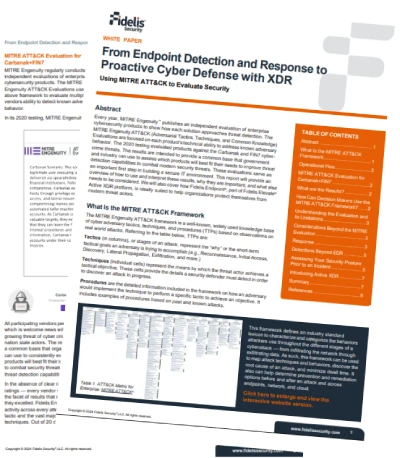
- Assessing Your Security Posture Prior to an Incident
- How Can Decision Makers Use the MITRE ATT&CK Framework?
- Beyond the MITRE Evaluation
Action: Conduct a comprehensive gap analysis mapping current detection capabilities to the MITRE ATT&CK framework, and develop a prioritized roadmap to address coverage gaps for techniques relevant to your threat model.
8. Develop Capabilities for Encrypted Traffic Analysis
Technical encrypted traffic analysis requires:
- TLS fingerprinting techniques examining Client Hello messages to identify client applications based on cipher suite preferences, extension ordering, and supported groups even when using standard ports.
- JA3/JA3S fingerprinting creates cryptographic hashes of TLS client and server negotiation characteristics enabling identification of abnormal implementations or tools.
- Certificate analysis capabilities examining certificate properties including issuer information, validity periods, key lengths, signature algorithms, and extension values to identify potentially fraudulent certificates.
- Timing analysis algorithms measuring packet intervals, burst patterns, and directional byte counts to identify protocol tunneling and covert channels operating within encrypted sessions.
- DNS correlation linking encrypted connections with preceding DNS queries to identify connections to suspicious domains despite encryption hiding actual HTTP host headers.
- QUIC protocol analysis capabilities inspecting QUIC handshakes to extract client identifiers and connection metadata despite the protocol's encryption of most handshake elements.
Action: Implement JA3/JA3S fingerprinting, DNS correlation, and traffic timing analysis to detect malicious activity in encrypted traffic without decryption, and maintain an updated baseline of normal encrypted traffic patterns.
9. Ensure Scalability and Flexibility
Technical scalability requirements include:
- Distributed processing architectures using multiple sensor nodes with local processing capabilities to reduce backhaul bandwidth requirements.
- Stream processing frameworks handling wire-speed traffic analysis without packet drops at increasing throughput levels.
- Horizontally scalable database technologies supporting metadata storage growth without performance degradation as network size increases.
- Multi-tiered storage architectures automatically migrate aging data to cost-effective storage while maintaining searchability across the entire retention period.
- Containerized deployment options supporting Kubernetes orchestration for dynamic scaling based on traffic volumes and analytical workloads.
- High-availability configurations with automated failover between redundant components to eliminate single points of failure in critical monitoring infrastructure.
- Federated deployment models supporting multi-tenant environments with logical separation between organizational units while maintaining centralized management.
Action: Architect NDR deployment with distributed processing capabilities, implement tiered storage for cost-effective data retention, and establish performance metrics for throughput monitoring with auto-scaling triggers.
10. Regularly Evaluate and Optimize Performance
Technical evaluation methodologies include:
- Red team exercises utilizing advanced adversary techniques to validate detection capabilities against realistic attack scenarios.
- False positive analysis automation categorizing alert patterns by root cause to identify systemic detection algorithm weaknesses.
- Detection latency measurement tracking time intervals between attack execution and alert generation across various threat categories.
- Tuning effectiveness metrics tracking improvements in detection precision following configuration adjustments with quantifiable performance metrics.
- Benchmark testing against standardized attack datasets including evaluation frameworks like MITRE ATT&CK Evaluations to enable comparative assessment.
- Machine learning model validation implementing A/B testing methodologies to evaluate detection efficacy improvements from algorithm refinements.
- Coverage gap identification through automated attack simulation frameworks executing variations of known attack techniques to discover defensive blind spots.
Action: Schedule quarterly detection testing using purple team exercises with specific success metrics, implement a formal tuning process for false positive reduction, and benchmark detection capabilities against industry evaluation frameworks.
- Block attacks before damage occurs
- Prevent lateral movement inside your network
- Reduce false positives & alert fatigue
Technical Implementation Considerations
When deploying NDR solutions, technical teams must consider packet capture capabilities, network tap placement, and span port configurations. Edge cases like asymmetric routing require special consideration during deployment planning.
Deep packet inspection (DPI) technologies analyze packet contents beyond metadata, offering granular visibility but requiring significant processing resources. Teams must balance visibility needs against performance impacts.
Rule tuning processes should incorporate baselining periods spanning multiple business cycles to capture normal traffic pattern variations. Inadequate baselining leads to excessive false positives during seasonal business pattern changes.
Network segmentation strategies should incorporate NDR sensor placement plans to ensure visibility at critical network boundaries. Blind spots often occur at segment transitions without proper sensor coverage.
Conclusion
Robust Network Detection and Response capabilities have become essential for enterprise security. The practices outlined provide a framework for deploying effective NDR solutions enhancing organizational ability to detect, analyze, and respond to network-based threats.
Focusing on comprehensive visibility, advanced detection methods, automated response capabilities, and integration with broader security ecosystems significantly improves security posture and reduces successful attack risks.
Effective network security requires ongoing attention and adaptation. Regularly reviewing and updating NDR strategies and network threat detection monitoring practices addresses emerging threats and leverages advances in detection and response technologies, ensuring organizations maintain protection against evolving cybersecurity challenges.
Citations: