
Enterprises today operate in environments defined by constant change—cloud migrations, distributed workforces, third-party integrations, and increasingly sophisticated adversaries. In this landscape, security failures rarely occur because controls are missing altogether. They happen because organizations fail to anticipate how attackers exploit design gaps, misaligned trust boundaries, or weak assumptions built into systems.
This is where threat modeling plays a critical role. Rather than reacting to alerts or breaches, organizations use threat models to understand attacker behavior in advance, assess risk in context, and design security controls that align with real-world threats. When applied correctly, threat modeling becomes a foundational capability for improving an organization’s overall security posture.
What Threat Modeling Means in an Enterprise Context
At an enterprise level, threat modeling is not a single workshop or document. It is a repeatable cybersecurity methodology used to analyze systems, data flows, and processes from an attacker’s perspective.
Organizations use threat modeling to answer fundamental questions:
- What assets are most critical to the business?
- How could attackers realistically access or abuse those assets?
- Where do trust assumptions break down?
- Which threats pose the highest operational, financial, or regulatory risk?
- What controls reduce risk most effectively?
Unlike traditional vulnerability scanning, threat modeling focuses on threat analysis and attack paths, not isolated weaknesses.
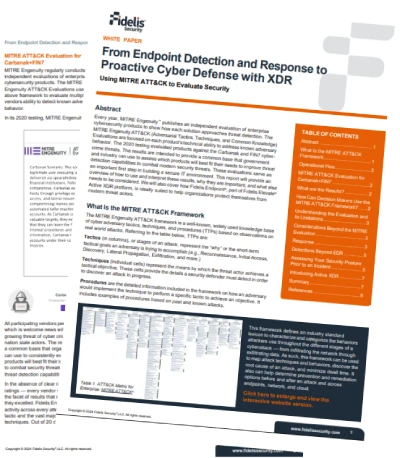
- Assessing Your Security Posture Prior to an Incident
- How Can Decision Makers Use the MITRE ATT&CK Framework?
- Beyond the MITRE Evaluation
Why Threat Modeling Improves Security Posture
Threat modeling improves security posture because it shifts organizations from reactive defense to risk-driven threat management.
Key outcomes include:
- Earlier identification of design-level security flaws
- More accurate and contextualized risk assessment
- Better prioritization of remediation efforts
- Stronger alignment between security, engineering, and business teams
Guidance from NIST consistently emphasizes that security controls are most effective when risks are understood before deployment—not after exploitation.
How Organizations Use Threat Models Across the Security Lifecycle
1. Improving Risk Assessment and Decision-Making
Threat modeling strengthens risk assessment by incorporating attacker intent and capability into analysis.
Instead of asking only “Is this vulnerable?” teams ask:
- How would this vulnerability be exploited?
- What conditions make exploitation likely?
- What business impact would result?
This enables structured threat risk assessment, where risks are evaluated based on:
- Likelihood of exploitation
- Ease of attack
- Potential impact on operations, data, and customers
Traditional Risk Assessment vs Threat-Model-Driven Risk Assessment
| Dimension | Traditional Approach | Threat-Model-Driven Approach |
|---|---|---|
| Primary input | Vulnerability severity | Attacker behavior |
| Context | Asset-centric | Attack-path-centric |
| Timing | Periodic | Continuous |
| Output | Patch lists | Risk-based priorities |
| Business alignment | Limited | Explicit |
This shift is particularly valuable for large enterprises where security resources are finite.
2. Strengthening Application Security Before Deployment
Application security threat modeling is one of the most widely adopted use cases.
Organizations apply threat modeling during design and development to:
- Likelihood of exploitation
- Identify insecure trust boundaries.
- Detect missing authentication, authorization, or encryption.
- Assess risks from APIs, microservices, and third-party components.
By identifying issues early, teams avoid costly redesigns and reduce exposure introduced during rapid development cycles. This approach aligns with secure-by-design guidance from CISA.
3. Enabling Structured Threat Analysis with Frameworks
To scale threat modeling, organizations rely on threat modeling frameworks that provide consistency and shared language.
Threat modeling frameworks help teams:
- Systematically identify threats.
- Reduce subjectivity in analysis.
- Apply consistent methodologies across teams.
- Support audits and governance requirements.
Common Threat Modeling Frameworks and Their Roles
| Framework | Primary Focus | Typical Enterprise Use |
|---|---|---|
| STRIDE | Threat identification | Application and system design |
| DREAD | Risk scoring | Prioritization and reporting |
| PASTA | Business-driven analysis | Enterprise risk management |
| Attack Trees | Scenario visualization | Executive communication |
| LINDDUN | Privacy threats | Regulatory and privacy compliance |
Most mature programs combine multiple frameworks rather than relying on a single approach.
4. Supporting Ongoing Threat Management Operations
Threat modeling is increasingly embedded into threat management workflows, not limited to design reviews.
Operational use cases include:
- Guiding threat hunting activities
- Informing detection engineering decisions
- Improving incident response playbooks
- Identifying gaps in existing controls
By mapping threats to known attacker techniques—such as those cataloged in MITRE ATT&CK—security teams ensure models reflect actual adversary behavior rather than theoretical risks.
- What data has been potentially exposed?
- Incursion detection and Persistence detection
- How should I respond?
5. Scaling Through Automated Threat Modeling
As enterprise environments grow more dynamic, manual threat modeling alone becomes unsustainable. Organizations increasingly adopt automated threat modeling to maintain accuracy and coverage.
Automation enables:
- Continuous updates as architectures change.
- Integration with CI/CD pipelines
- Faster reassessment of risk after system modifications
- Reduced reliance on manual workshops.
This capability supports broader cybersecurity automation initiatives while preserving analytical depth.
How Threat Modeling Strengthens Enterprise Cybersecurity Posture Management
Threat modeling directly supports enterprise cybersecurity posture management by providing a unified view of exposure across applications, infrastructure, and data.
Key posture improvements include:
- Better visibility into attack surfaces
- Clear prioritization of defensive investments
- Stronger alignment between security controls and business risk
- Improved governance and audit readiness
What are the Enterprise Challenges Addressed by Threat Modeling?
| Challenge | Threat Modeling Impact |
|---|---|
| Expanding attack surface | Identifies exposed paths early |
| Cloud and hybrid complexity | Maps trust boundaries clearly |
| Limited security resources | Focus effort on highest-risk threats |
| Regulatory obligations | Demonstrates proactive risk management |
| Executive communication | Translating technical risk into business impact |
Role of Threat Modeling in Large Enterprises
For large enterprises, threat modeling supports scale, consistency, and governance.
Organizations use it to:
- Standardized security analysis across business units
- Support cross-functional collaboration.
- Reduce dependency on reactive incident handling.
- Inform long-term security architecture decisions.
This makes threat modeling especially valuable for organizations seeking cybersecurity solutions for large enterprises operating in complex, regulated environments.
Alignment with Enterprise Cybersecurity Trends
According to ENISA, modern cyber threats are increasingly converged, persistent, and automated. Threat modeling aligns with emerging enterprise cybersecurity trends by:
- Supporting intelligence-driven defense
- Enabling continuous exposure management
- Reducing reliance on perimeter-based assumptions
- Improving resilience against sophisticated campaigns
Threat modeling allows organizations to adapt defenses as threat landscapes evolve.
Selecting the Right Threat Modeling Approach
Organizations should align their approach with maturity, resources, and risk profile.
- New programs benefit from STRIDE-based threat identification.
- Data-driven teams adopt DREAD for quantitative prioritization.
- Highly regulated enterprises use PASTA for structured risk governance.
- Agile development teams integrate lightweight and automated approaches.
- Privacy-focused organizations use LINDDUN alongside security frameworks.
Consistency matters more than perfection—repeatable processes deliver the greatest value.
Why Threat Modeling Is a Long-Term Security Investment
Threat modeling improves security posture not by adding tools, but by improving how organizations think about risk.
It enables enterprises to:
- Anticipate attacks instead of reacting to breaches.
- Make informed, risk-based security decisions.
- Embed security into systems from the start.
- Adapt defenses as environments and threats evolve.
In an era defined by escalating cyber security and defense challenges for enterprises, threat modeling is no longer optional. When treated as continuous discipline, it becomes one of the most effective ways to reduce exposure, strengthen resilience, and protect critical business assets.