
Key Takeaways
- Network traffic monitoring enables organizations to detect anomalies, prevent breaches, and maintain performance through continuous visibility across all network activity.
- A real time network traffic monitoring approach helps identify spikes, unauthorized access, and malware indicators before they escalate into critical incidents.
- Enterprise network traffic monitoring integrates with existing security tools like SIEM to provide centralized visibility and faster incident response.
- Modern network traffic monitoring tools support cloud, IoT, and distributed environments, ensuring compliance, scalability, and proactive threat detection.
The best defense is a good offense.
Network traffic monitoring isn’t just about keeping operations running; it’s also about protecting precious data from ever emerging threats. A real time network traffic monitoring approach simplifies this process by delivering real-time alerts, security scans, and continuous monitoring of all network activity.
Cybercrime is expected to cost the global economy more than $20 trillion by 2026[1]; 1.5 times rise from 2022. Such a surge demonstrates why organizations require effective and efficient network monitoring solutions. Organizations that continuously monitor network activity can spot abnormalities, prevent breaches, and maintain smooth operation before issues escalate.
What is Network Monitoring?
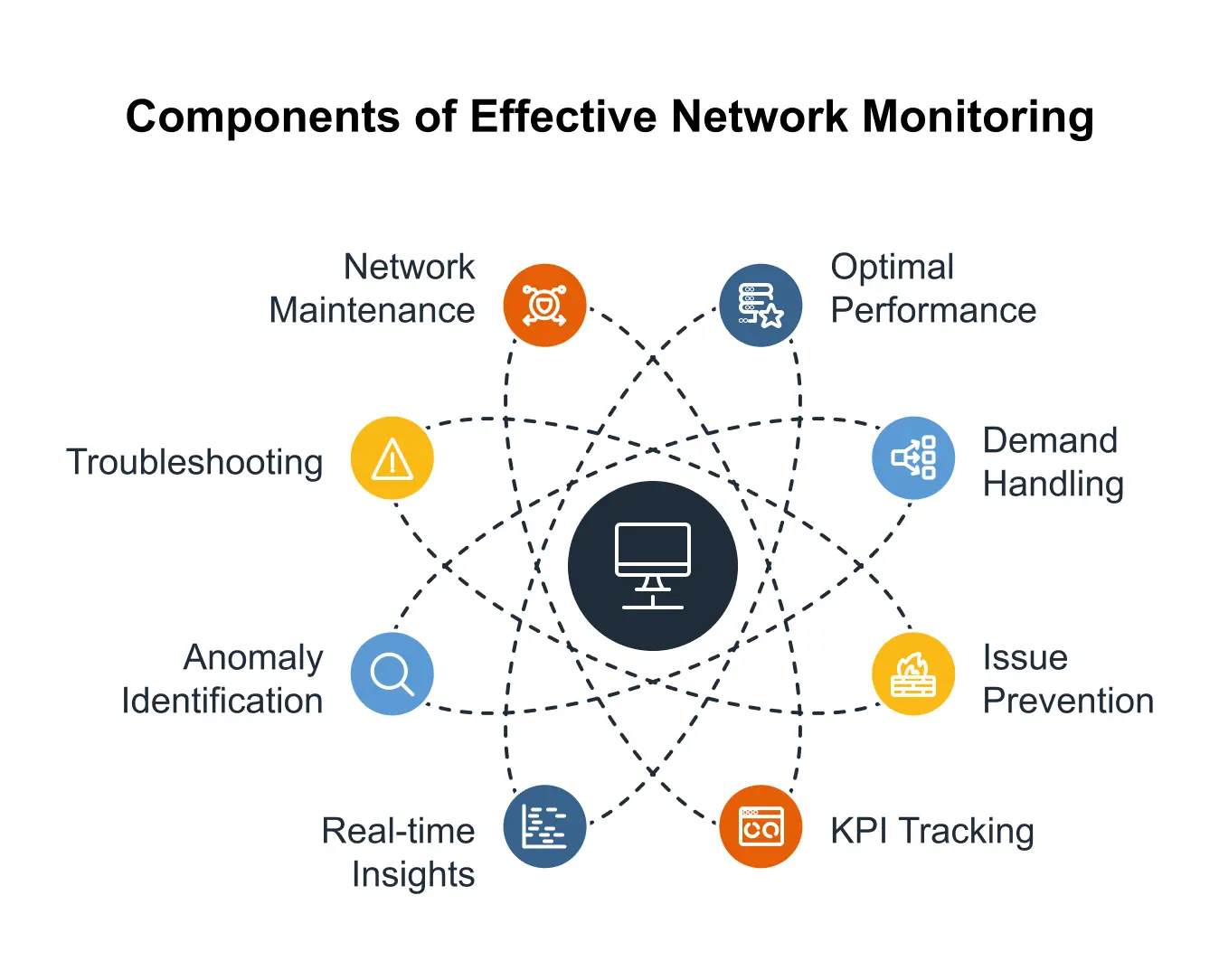
Think of a network monitoring system as a constant health check for your IT setup, working around the clock. It’s not simply about keeping things going; it’s about ensuring your network is running optimally, can deal with increasing demands, and gets ahead of any potential issues.
Network Monitoring Best Practices for Traffic Analysis
1. Define Clear Network Monitoring Objectives
Without clear objectives, network infrastructure monitoring best practices become reactive rather than strategic. Organizations should define precise goals to enhance efficiency and security.
- Ensure Uptime – Detect outages early to keep essential infrastructure running smoothly.
- Optimize Bandwidth Usage – Identify excessive usage and unusual spikes to prevent slowdowns and congestion.
- Enhance Security – Monitor for open ports, vulnerabilities, and misconfigurations to block cyber threats and unauthorized access.
- Detect Unauthorized Access – Use network traffic monitoring to identify unknown devices, suspicious login attempts, and abnormal access patterns in real time.
- Track Devices – Monitor new device connections in real time to detect unauthorized entry attempts, crucial for BYOD and remote work environments.
2. Choose the Right Network Monitoring Tools
Not every network traffic monitoring tool offers the same capabilities. Choosing the right one depends on key factors:
- Feature Set – Ensure real-time traffic analysis, anomaly detection, and automated alerts match your security and performance needs.
- Integration – The tool should support enterprise network traffic monitoring by seamlessly connecting with existing infrastructure for a unified security posture.
- Scalability – Select a security solution that can handle growing traffic, additional devices, and expanding cloud environments without performance loss.
- Customization – Look for tools that allow tailored dashboards, alerts, and reports to meet operational demands.
- Deployment Model – Choose on-premises for control, cloud-based for flexibility, or hybrid for diverse environments.
- Cost Efficiency – Ensure the tool offers the necessary capabilities within budget constraints.
Cloud-based network traffic monitoring tools provide scalable visibility across distributed environments, enabling real-time alerts, centralized dashboards, and flexible deployment without on-prem infrastructure constraints.
Solutions like Fidelis Network® provide real-time threat detection, advanced monitoring, and full network visibility, helping organizations stay ahead of security risks.
- Comprehensive Visibility
- Proactive Threat Defense
- Optimized Incident Response

3. Monitor Key Performance Indicators (KPIs)
Effective network monitoring isn’t just about fixing issues—it’s about preventing them. Tracking key metrics ensures stability and efficiency.
- Latency – Measures data travel time. High latency causes slow applications, video call buffering, and delays in real-time communication.
- Packet Loss – Tracks lost data packets. Even minor packet loss disrupts voice/video quality, file transfers, and application performance.
- Bandwidth Utilization – Shows network capacity in use. Persistent high usage signals congestion and the need for more capacity.
- Error Rates – Identifies corrupted or dropped packets due to poor connections or hardware issues, affecting reliability and performance.
- CPU & Memory Usage – Monitors device resource consumption. Overloaded routers or firewalls slow down networks and create security risks.
By continuously monitoring these KPIs, IT teams can prevent performance issues, reduce downtime, and optimize resource allocation for a more resilient network.
4. Implement Proactive Monitoring
Do not wait for network issues to disrupt your operation. Downtime and slow performance can be costly, but proactive monitoring allows you to identify and resolve issues before they become huge challenges. Here’s how you can remain ahead:
- Set Performance Thresholds: Establish constraints for metrics like latency, packet loss, and bandwidth. When these numbers go up, the IT department is notified before users notice an issue.
- Automate Alerts: Set up automated alerts to check network performance around the clock. Real-time notifications allow IT staff to address issues before they worsen.
- Schedule regular audits: Routine checkups help to identify security gaps, outdated settings, and weak network components, ensuring optimal and efficient performance.
By implementing proactive monitoring, organizations can minimize downtime, enhance network stability, and ensure a seamless user experience—keeping operations running smoothly and preventing costly disruptions.
5. Establish Network Baselines
To catch network risks before they become major problems, IT teams need to know what “normal” looks like. Establishing network baselines helps separate routine fluctuations from real threats, making it easier to detect performance issues and security risks. Here’s how to do it right:
- Collect Data – Track key metrics like latency, bandwidth usage, and error rates over time. A longer collection period means a more accurate baseline.
- Analysis – Identify trends and patterns to determine what constitutes normal performance. This includes understanding peak usage times, expected variations, and consistent traffic patterns.
- Document Everything – Keep a record of baseline metrics and maintain an updated network map. A clear visual of devices and connections helps IT teams quickly spot anomalies and misconfigurations.
With solid baselines in place, IT can instantly recognize suspicious deviations, whether it’s a security breach, hardware failure, or performance bottleneck—leading to faster troubleshooting and a more secure, stable network.
6. Ensure High Availability
Downtime isn’t an option when business operations rely on a stable network. A highly available network keeps services running smoothly, even during hardware failures, cyberattacks, or unexpected outages. Here’s how to make sure your network stays up:
- Build Redundancy – Use backup systems, failover mechanisms, and multiple network pathways to prevent single points of failure. Redundant internet connections, load balancers, and backup power supplies keep everything running.
- Stay on Top of Maintenance – Regular updates, firmware patches, and system checks help fix vulnerabilities before they cause disruptions, ensuring peak network performance.
- Plan for the Worst – A solid disaster recovery strategy with offsite backups, documented recovery steps, and a tested incident response plan helps restore operations fast after an outage.
Prioritizing high availability means fewer disruptions, better reliability, and seamless business continuity—no matter what comes your way.
7. Collect Data from Multiple Sources
Relying on a single data point can leave IT teams blind to critical network issues. Gathering data from multiple sources ensures a complete, accurate view of network health. Here’s how to do it right:
- Monitor Everything – Track performance across routers, switches, firewalls, servers, and endpoints to catch weak spots before they cause trouble.
- Integrate Smartly – Use tools that aggregate data from different sources, giving IT teams a centralized, real-time view of network activity.
- Connect the Dots – Correlate data points to uncover hidden issues. A sudden CPU spike paired with packet loss could signal a cyberattack or network congestion.
By pulling data from multiple sources, IT teams can diagnose and resolve issues faster keeping the network strong and resilient.
8. Implement Configuration and Change Management
Unchecked changes to network settings can lead to performance issues, security gaps, or even system failures. A structured approach to configuration and change management keeps everything running smoothly:
- Monitor Configurations – Continuously track network settings, firmware updates, and software changes to catch misconfigurations before they cause disruptions.
- Use Version Control – Maintain backups of past configurations so IT teams can quickly roll back changes if something goes wrong.
- Run Regular Audits – Periodically review settings to identify misconfigurations, unauthorized changes, and security risks.
- Automate Tracking – Leverage tools that log every modification, flag unauthorized changes, and create audit trails for compliance.
With strong configuration management, IT teams can minimize downtime, boost security, and keep the network running at peak performance.
9. Stay Ahead with Smart Alert & Escalation Management
Catching network threats and vulnerabilities early prevents outages and security incidents. A strong alerting system ensures IT teams can act fast when something goes wrong. Here’s what it should include:
- Threshold-Based Alerts – Get notified when key metrics like latency spikes, packet loss, or error rates exceed safe limits.
- Multi-Channel Notifications – Send alerts via email, SMS, and dashboards so the right people respond immediately.
- Clear Escalation Paths – Define who handles each issue type and ensure critical problems reach senior personnel quickly.
- Incident Response Playbooks – Use predefined response steps for common network issues to speed up troubleshooting and resolution.
With a well-structured alert system, IT teams can react fast, reduce downtime, and keep the network running smoothly.
- What data has been potentially exposed?
- Incursion detection and Persistence detection
- How should I respond?
10. Implement Security Information and Event Management (SIEM) Systems
A Security Information and Event Management (SIEM) system helps IT teams detect and respond to threats in real time. Here’s how it improves network security:
- Centralized Data Collection – Pull security logs from firewalls, servers, endpoints, and other devices for full visibility.
- Real-Time Threat Detection – Identify and alert teams about potential security breaches as they happen.
- Compliance Reporting – Maintain detailed logs to meet industry regulations and security standards.
With SIEM in place, organizations can monitor, analyze, and respond to cyber threats faster, reducing the risk of breaches.
11. Conduct Regular Vulnerability Assessments
Cyber threats evolve constantly, and network weaknesses can be exploited fast. Regular vulnerability assessments help IT teams stay ahead. Here’s how:
- Scheduled Scans – Run frequent security checks to find misconfigurations, outdated software, and weak security controls.
- Risk Prioritization – Rank vulnerabilities based on severity so the most dangerous threats are addressed first.
- Patch Management – Apply updates and security patches promptly to close gaps before attackers exploit them.
- Continuous Monitoring – Use vulnerability scanning alongside network monitoring to detect threats in real time.
Routine security assessments strengthen defenses, reduce risks, and help prevent costly breaches or system failures.
12. Train IT Staff for Effective Monitoring
Even the most sophisticated monitoring tools are only effective if the people using them know what they’re doing. To boost security and performance, IT teams need thorough training in:
- Interpreting Alerts – Differentiate between routine notifications and critical warnings to prevent false alarms and ensure fast action.
- Recognizing Anomalies – Spot unusual network behavior that could signal security threats, system failures, or performance issues.
- Incident Response Readiness – Equip teams with the skills to react swiftly to threats and prevent network downtime or breaches.
- Maximizing Monitoring Tools – Train staff on dashboards, reports, and settings to ensure accurate tracking and analysis.
Regular hands-on training helps IT teams stay ahead of evolving threats, keeping networks secure and high-performing.
13. Network Mapping and Inventory
Mapping and inventorying all devices, connections, and configurations is the start of understanding your network.
- Network Mapping – Visualizing the entire infrastructure, makes it easier to detect issues and optimize performance.
- Comprehensive Inventory – Maintain detailed records of all devices, software versions, and configurations for better management.
- Faster Troubleshooting – Locate issues quickly, identify compromised devices, and fix issues with minimal downtime.
- Improved Security & Compliance – Ensure all devices are up to date, properly configured, and meet regulatory requirements.
A well-documented network structure simplifies monitoring, enhances security, and improves operational efficiency.
14. Reporting and Documentation
Proper reports and thorough documentation are needed and important for maintaining a healthy and secure network.
- Performance Reports – Track trends, identify bottlenecks, and optimize network efficiency.
- Change Logs – Keep records of configurations, updates, and maintenance activities to streamline troubleshooting.
- Regulatory Compliance – Ensure adherence to security and industry regulations with detailed documentation.
- Team Collaboration – Improve communication between IT teams with clear records of network modifications.
Accurate and regular reporting and documentation make network management efficient, reducing risks and downtime.
Conclusion
Network monitoring is all about monitoring traffic, ensuring security, performance, and business continuity.
By implementing the above-mentioned best practices, organizations can:
- Detect threats early and prevent disruptions
- Strengthen security and improve compliance
- Optimize network performance for better efficiency
Cyber threats are ever evolving and so should be your monitoring strategies. Invest in robust solutions like Fidelis Network® for proactive monitoring and get a secure, resilient, and high-performing network.
- Visualize attacker movement across the network
- Detect encrypted and evasive activity
- Automate responses with precision

Frequently Ask Questions
How can I monitor network traffic in real time and get alerts?
What should I look for in a network traffic monitoring tool?
Keep it simple. It should give you clear visibility, handle your scale, and work with your existing tools. Also, alerts should be useful, not overwhelming, or your team will start ignoring them.
How does network traffic monitoring help with security and compliance?
It helps you spot unusual activity early and keeps a record of what is happening in your network. That makes it easier to respond to threats and also helps during audits when you need proof.
What are the key protocols used in network monitoring?
Common network monitoring protocols include SNMP for device monitoring, NetFlow for traffic analysis, Syslog for event logging, and ICMP for checking device availability and network performance.
How does a network monitoring dashboard improve network management?
A network monitoring dashboard provides a centralized view of network health, traffic, alerts, and performance metrics, helping IT teams identify issues faster and respond more efficiently.
What are the best tools for network monitoring and security?
The best tools provide real-time traffic analysis, threat detection, automated alerts, SIEM integration, and support for cloud and on-premises environments. Solutions like Fidelis Network® combine network monitoring with advanced security capabilities.
Citations:
Key Terms Used in This Article